
In automotive sector, precision is not a target, but a requirement. Meeting dimensional requirements on lightweight suspension parts made of aluminum materials, to heavy gearbox housings made of high strength steel; dimensional accuracy may be the difference between optimum performance and expensive recalls.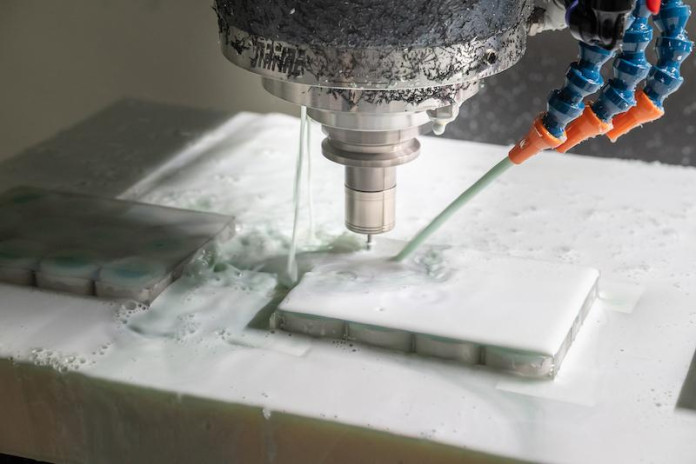
Of the vast pool of contemporary manufacturing processes, multi-axis CNC milling undertakes the feat of achieving desired shapes and geometry on the same scale as other, more complex ways of manufacturing intricate automotive parts. With vehicle designs becoming increasingly organic-looking and utilizing undercut features and compound surfaces, the potential of CNC-milling parts has become greater than the scope of three-axis manufacturing systems.
Why Multi-Axis Capabilities Matter in Automotive Manufacturing
As it creates a large range of parts, three-axis CNC machines demand numerous independently set-ups when cutting complex shapes. With every reposition, there is a risk of compound tolerances, or cumulative tolerances of the final items. Multi-axis CNC systems by contrast where the cutting tool can come to the workpiece from any direction 3 through 5 axis systems are becoming increasingly positioned as a better choice. This decreases repositioning, minimizes production time and enhances surface finish.
Such precision is essential in automotive engineering. Tolerances in high-performance engine parts, turbine casings and custom-made brake calipers can require tolerances as low as ±0.005 mm. Performance, durability or safety may be compromised by the tiniest misalignment. Rapid prototyping companies will offer more rapid prototype iterations and feedback due to being able to manufacture such components in fewer steps to improve overall design.
In addition, multi axis machines are able to accommodate complex geometries such as pockets, ribbed surfaces and compounded angles that are typical of contemporary vehicle aerodynamics and lightweight structure designs. Outcome is not only increased accuracy, but also more freedom of the auto engineers to innovate rather than being bound to traditional limits of the manufacturing process.
Advanced Toolpath Strategies for Complex Geometries
Multi-axis machining is based on the robustness of modern CAM (Computer-Aided Manufacturing) software. The highly complex automated parts require a developed controlling of toolpath generation to match the coverage by the cutting tool in the closest possible way and reduce tool deflection and tissue beat speeds. Surface finish quality can be maintained to a constant on even the most contoured shapes by methods such as swarf cutting, morphing toolpaths, and flowline machining.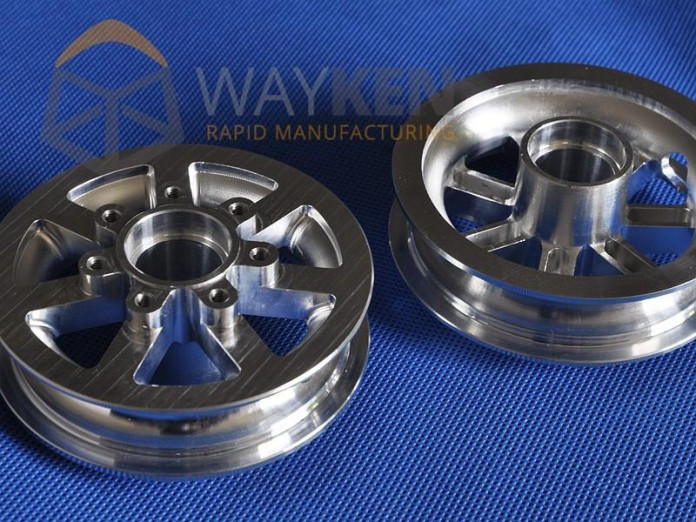
Consider milling of titanium suspension knuckle. Employing the conventional techniques on a three-axis machine would involve several setups and may involve leaving witness marks on consecutive set-ups. The tool can be kept at a constant angle to the surface, with a five-axis set up; this allows there to be less secondary finishing that has to be done. This is especially useful in CNC milling parts used in motorsports and where the weight and aerodynamics are paramount.
Moreover, flexible clearing effort minimizes the radial tool involvement, enhances chip clearance and prolongs tool durability. This becomes the ability to produce quicker without any possible quality loss to the rapid prototyping companies, a major gain in the competitive market where time is as vital as the accuracy.
Material Considerations and Machining Challenges
Multi-axis CNC milling is excellent in working with most types of the ever-growing number of materials that are processed within the automotive industry. Drive train steels, aluminum alloy structural parts and magnesium housings each create their own engineering challenges. Low thermal conductivity and high strength make titanium alloys, popular in performance cars as exhaust and suspension systems, notoriously hard to machine.
One way these challenges can be tackled is through multi-axis ability, which allows using shorter tools, better approach angles and more efficient coolant delivery. E.g., machining a complex magnesium intake manifold, having the tool approach the workpiece at various angles with a 5-axis set up, would provide constant wall thickness with no opportunity to end up with chatter.
But machining exotic materials does not come without dangers. Inadequate toolpath planning may result in excessive heat accumulation, which causes work hardening of titanium or bowing of thin aluminum parts. This is where the rapid prototyping companies that specialize in automotive components come in, with their knowledge of tooling, coatings, and parameters of cutting to to get repeatability and performance out of their CNC milling parts.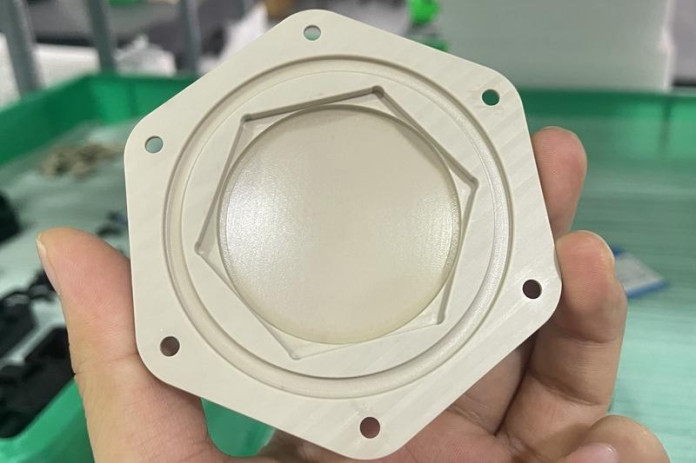
From Prototype to Production: Streamlining the Transition
This is likely to cause delays and cost overruns in automotive manufacturing when moving from prototype to full production. CNC mill of the multi-axis variety mitigates this risk because the exact same setup and machining scheme employed on a prototype can be scaled to low-volume production with little to no adjustment.
As an example, a prototyped honeycomb, gearbox casing with complex oil passages may be turned out of billet on a five-axis mill. A validated digital model and the computer numerical control part program can be reused, perhaps with material or tool alterations, for initial production quantities. Such continuity also restricts dimensional changes between prototypes and manufactured units. The hybrid workflows are also preferable to be used with multi-axis setups. Additive manufacturing has the ability to produce a near-net-shape blank, and the latter can then be finish-machined on a five-axis mill to tolerance. This is one of the methods used by many rapid prototyping companies to minimize wastage material without losing the accuracy of CNC milling parts.
The Competitive Edge in Automotive Innovation
This movement, by the industry toward electric powertrains, ADAS and lightweighting, is driving the trend towards tailored, precision components. Multi-axis CNC milling satisfies this requirement with low-volume runs flexibility, accuracy when safety is paramount and the ability to generate extreme shapes second-nature to traditional techniques. In motorsports, rapid prototyping companies have high multi-axis capability, and supply working CNC milling parts in just a few weeks; advantages on a motorsports team consist of performance gains through weight reductions or airstream advances.
This technology also lets engineers machine intricate designs (e.g., high-strength aluminum subframes or EV battery cooling plates) directly out of CAD without redesigning to manufacturability, faster innovation, resulting in better parts performance, even in mainstream production.
Conclusion
Multi-axis CNC milling has become essential for producing intricate automotive components, offering fewer setups, higher accuracy, and the ability to handle complex geometries. For rapid prototyping companies, it speeds up iteration and smooths the transition to production. As automotive designs grow more complex and lightweight, advanced multi-axis systems will be key to delivering both speed and precision.