
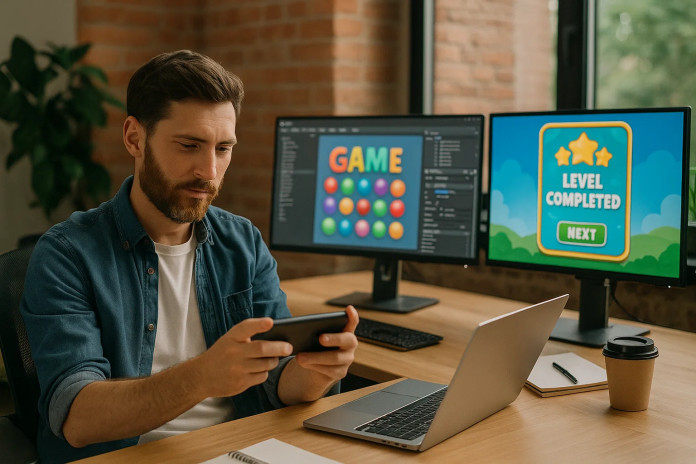
A mobile app development company can take a scrap of an idea — maybe a hero sketched on the corner of a meeting agenda, or a single gameplay twist scribbled on a phone note — and turn it into a title people check every morning on the train. There’s a kind of magic in seeing something that started as a “what if” become a real thing that sits on thousands of home screens.
But that magic isn’t the whole story. Building the game is exciting, but keeping it alive? That’s where the real work lives.
Where an Idea Starts to Take Shape
It usually begins small. Someone imagines a puzzle with colors that change under pressure. Or a racing game where the track rearranges itself mid-lap. On paper, it’s quick sketches and messy arrows.
When the project moves into production, the team layers those ideas with sound, animation, and gameplay rules. Suddenly there’s a prototype — clunky at first, but enough to give people a taste. Friends and testers tap through it, laughing or frowning, and that feedback shapes the next version.
Why a Mobile Game Development Company Makes the Difference
A mobile game development company doesn’t just write code. They build an experience that works with the way people use their devices — sometimes for a few minutes while waiting for coffee, sometimes for hours late at night.
They think about:
- How a tap feels — is it satisfying or awkward?
- The pace at which rewards appear — too slow and players drift away, too fast and it loses challenge.
- Sounds that make progress feel rewarding.
- Graphics that don’t just look good but also guide the player’s attention.
That blend of art, tech, and psychology isn’t something you wing. It comes from working on games long enough to know what players respond to — and what makes them quit.
The Trap of Thinking “Launch Means Done”
It’s tempting to see the release date as the big finish. The app goes live, people download it, reviews pop up, and the team celebrates. But the truth? That’s more like opening night at a theater — the play still runs, and the audience still expects you to keep it worth watching.
This is where mobile app maintenance and support services prove their worth. Without updates, even the best games get stale. Bugs appear, devices change, and competitors give players shiny new distractions.
Good maintenance means:
- Squashing glitches before they become a reason to uninstall.
- Rolling out seasonal or surprise content that makes people curious again.
- Adapting to new operating systems so the game doesn’t crash on updated phones.
- Listening to what players actually say in reviews and support tickets.
How Players Experience Updates
From the player’s side, updates feel like small gifts. Maybe it’s a new level they weren’t expecting. Or a holiday-themed event that makes them smile. Even a subtle change — like a faster load screen — can make someone think, “They’re still working on this. They care.”
Without those touches, the game drifts into the background. With them, it becomes a habit.
A Typical Development Path (with All the Messy Bits)
No two projects are identical, but many follow a rhythm something like this:
- Concept Stage – Brainstorming, arguing over mechanics, sketching, scrapping, sketching again.
- Prototype – Building a rough version to see if the “fun” exists.
- Core Development – Art, music, coding, and dozens of test builds.
- Beta Testing – Giving it to a group that will definitely break it in ways no one expected.
- Launch – Excitement mixed with anxiety as real players arrive.
- Ongoing Care – The unglamorous but essential work that keeps the game alive.
Why Long-Term Care Pays Off
For businesses, a mobile game isn’t just a side project. It can be a steady source of revenue, a marketing tool, or a way to build brand loyalty. But those benefits fade fast if the game stops feeling fresh.
Investing in updates keeps old players coming back and gives new players a reason to try it. Over time, this turns a one-time release into something that keeps earning attention — and income.
Choosing a Team You Can Trust
The right partner doesn’t just promise a launch; they’re ready to stick around after. Look for:
- Proof they’ve kept games running smoothly for years.
- A clear process for fixing issues quickly.
- An interest in your ideas rather than a one-size approach.
- Openness about costs for ongoing work.
Final Thoughts
Great games don’t just appear — they’re shaped, tested, and cared for over the long haul. The launch is only the start. With the right team, an idea can grow into something players keep coming back to, not because they have to, but because they want to.
And that’s how a small sketch turns into a mobile game people remember.