
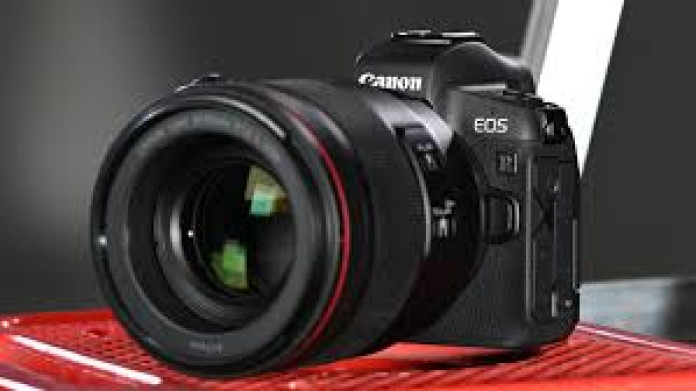
When Canon first stepped into the full-frame mirrorless arena with the EOS R, the photography world buzzed with anticipation. Positioned as Canon’s answer to Sony’s Alpha lineup and Nikon’s Z series, the EOS R wasn’t just another camera—it was Canon’s bold declaration that mirrorless was no longer a niche. With its combination of innovative design, strong image quality, and the introduction of the new RF lens mount, the EOS R remains a fascinating camera to evaluate even years after its release. Whether you’re a professional photographer, a videographer, or an enthusiast ready to upgrade, the EOS R still has plenty to offer.
In this detailed EOS R review, we’ll unpack the EOS R’s design, performance, features, pros and cons, and ultimately help you decide if it’s the right camera for your needs.
First Impressions and Build Quality
The Canon EOS R immediately gives off a premium feel. Constructed with magnesium alloy, it strikes the right balance between durability and portability. The body is weather-sealed, providing reassurance to professionals who often shoot in unpredictable conditions.
At 660g (with battery and memory card), the EOS R is slightly lighter than many DSLR counterparts, making it a comfortable choice for travel and long shoots. The ergonomics are classic Canon—deep handgrip, intuitive button placement, and a minimalistic yet functional design.
One notable change is the multi-function touch bar located near the viewfinder. Canon envisioned this as a customizable control tool, but the reception has been mixed. Some photographers find it handy for adjusting settings like ISO or white balance, while others find it awkward and less reliable than traditional dials.
The RF Mount: A Game Changer
A highlight of the EOS R system is the introduction of the RF lens mount. With a 54mm diameter and a short 20mm flange distance, the RF mount allows Canon to design lenses with superior optical performance. Early RF lenses such as the RF 28-70mm f/2L and RF 50mm f/1.2L demonstrated just how much potential the system had.
For users upgrading from Canon DSLRs, the EF to RF adapter ensures seamless use of existing EF and EF-S lenses, retaining full autofocus and image stabilization support. This backward compatibility makes the EOS R especially appealing to long-time Canon shooters.
Image Quality
The EOS R is powered by a 30.3-megapixel full-frame CMOS sensor, paired with Canon’s DIGIC 8 image processor. The results are impressive—images are rich, sharp, and carry the signature Canon color science that many photographers love.
Dynamic range is solid, though not class-leading when compared to Sony’s sensors. In well-lit conditions, the EOS R produces outstanding results, but shadows can reveal noise if you push them too far in post-production.
Low-light performance is strong, with usable results even at ISO 6400 and beyond. Paired with fast RF lenses, the EOS R becomes a reliable tool for night and event photography.
Autofocus Performance
One of the standout features of the EOS R is its Dual Pixel CMOS AF system. With 5,655 selectable AF points covering nearly the entire frame, the camera offers remarkable flexibility. Autofocus is fast, accurate, and excellent at tracking moving subjects.
Face and eye detection are included, though not as refined as Sony’s Real-Time Eye AF. Still, for portraits and event shooting, the system rarely misses focus.
In low light, autofocus performance remains reliable down to -6 EV with fast lenses—a spec that makes the EOS R one of the best performers in dim environments.
Video Capabilities
For videographers, the EOS R offers 4K recording at up to 30fps and Full HD at up to 60fps. Video quality is excellent, with beautiful colors and sharp details.
However, there’s a caveat: the 1.7x crop in 4K. This means your wide-angle lenses won’t appear as wide, which is a limitation for vloggers and filmmakers. Additionally, while the EOS R supports 10-bit 4:2:2 output via HDMI, internally it records 8-bit video.
On the plus side, the Dual Pixel AF works in video mode, making focus transitions smooth and cinematic. For hybrid shooters who balance photography and video, the EOS R is capable, though not class-leading in this department.
Usability and Features
The EOS R shines in usability thanks to Canon’s tried-and-true interface. The 3.15-inch fully articulating touchscreen is bright, responsive, and supports full touch navigation. This makes menu navigation and focus selection incredibly intuitive.
The 3.69-million-dot electronic viewfinder (EVF) is crisp and lag-free, giving photographers a DSLR-like experience without the mirror.
Battery life is respectable, rated at around 370 shots per charge ( CIPA standard ), though real-world performance can often be higher. For longer shoots, having a spare battery is recommended.
Connectivity
The EOS R comes with Wi-Fi and Bluetooth connectivity, allowing easy image transfers to smartphones via Canon’s Camera Connect app. Remote shooting is also supported, which is handy for landscapes, group shots, or studio work.
Who Is the EOS R For?
The Canon EOS R is not a one-size-fits-all solution, but it caters well to a range of photographers:
- Portrait and wedding photographers will love the color science, eye detection, and ability to use fast RF lenses.
- Travel and street photographers will appreciate the portability and weather sealing.
- Event shooters will benefit from the reliable autofocus in low light.
- Videographers may find the 4K crop restrictive, but vloggers and hybrid shooters can still make great use of its video quality and Dual Pixel AF.
Pros and Cons
Pros
- Excellent build quality and ergonomics
- 30.3MP full-frame sensor with great image quality
- Dual Pixel AF with 5,655 focus points
- Fully articulating touchscreen and high-resolution EVF
- Backward compatibility with EF lenses via adapter
- Reliable low-light performance
Cons
- 4K video crop (1.7x) is limiting for wide shots
- Single memory card slot (SD UHS-II only)
- Average dynamic range compared to competitors
- Mixed reception of the touch bar control
Final Verdict
The Canon EOS R marked a turning point for Canon. While not perfect, it laid the foundation for the RF system and proved that Canon could deliver a competitive mirrorless camera. Today, with more advanced models like the EOS R5 and R6 available, the EOS R might feel like a stepping stone. But that doesn’t mean it’s outdated.
For photographers seeking Canon’s color science, great ergonomics, and access to RF lenses without breaking the bank, the EOS R remains a strong contender. It’s especially appealing to those upgrading from Canon DSLRs who want to future-proof their lens collection.
In short, the Canon EOS R may not be the flagship mirrorless camera anymore, but it’s still a workhorse that delivers stunning results. If you’re ready to step into Canon’s mirrorless world, the EOS R is a compelling and affordable entry point.