
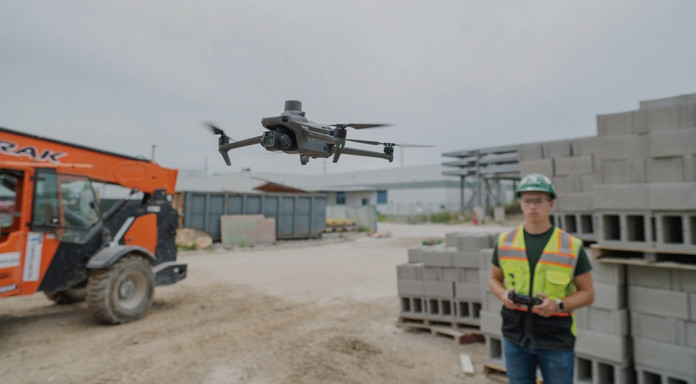
Introduction to Drone Technology in Construction and Maintenance
The construction industry and property management sector are undergoing a transformation, thanks to the rise of drone technology. Unmanned aerial vehicles (UAVs), commonly known as drones, have become indispensable tools for aerial surveying, site monitoring, and property inspections. By leveraging aerial drones, professionals can enhance efficiency, improve safety, and reduce costs. This article explores how drones are reshaping construction project management and building maintenance, offering practical insights and real-world applications to help you understand their value.
Why Drones Are Game-Changers for Construction
Enhanced Site Safety with Aerial Monitoring
Safety is a top priority on any construction site. Traditional methods of site safety inspections often involve workers climbing scaffolding or using heavy machinery, posing risks. Inspection drones equipped with drone cameras and sensors can capture real-time data from hard-to-reach areas, eliminating the need for manual inspections in dangerous zones. For example, a multirotor drone can hover over a skyscraper under construction, identifying structural weaknesses without putting workers at risk.
Precision Surveying with Photogrammetry and LiDAR
Precision surveying is critical for accurate project planning. Surveying drones use photogrammetry and LiDAR scanners to create detailed 3D mapping and topographical models of construction sites. These aerial surveying tools provide data with centimeter-level accuracy, enabling engineers to plan foundations, roads, and utilities with confidence. Unlike traditional surveying methods, which can take days, LiDAR-equipped drones complete the task in hours, saving time and resources.
Real-Time Construction Site Monitoring
Construction site monitoring has never been easier. Aerial drones equipped with GPS modules and flight controllers can fly pre-programmed routes, capturing aerial imaging to track progress. Project managers can access real-time data collection through cloud-based mapping platforms, allowing them to monitor milestones, detect delays, and ensure projects stay on schedule. For instance, a fixed-wing drone can cover large sites, providing a comprehensive overview of progress in a single flight.
Drones in Property Maintenance: A New Era of Efficiency
Structural Assessments Made Simple
Maintaining infrastructure such as bridges, commercial buildings, or residential complexes requires regular structural assessments. Maintenance drones fitted with thermal cameras can detect issues like heat leaks, water damage, or electrical faults that are invisible to the naked eye. For example, a thermal imaging drone can identify insulation gaps in a building’s facade, helping property managers prioritize repairs and avoid costly damages.
Roof and Facade Inspections
Inspecting roofs and facades is time-consuming and risky. Drone-assisted inspections streamline this process by capturing high-resolution images and videos. Quadcopters with high-resolution drone cameras can navigate tight spaces, providing detailed visuals of cracks, corrosion, or wear. This data is stored on cloud-based platforms, allowing property managers to review findings and plan maintenance without scaffolding or cranes.
Cost-Effective Property Management
Property management involves balancing budgets and maintenance needs. Drones reduce costs by minimizing the need for manual labor and heavy equipment. For instance, a hybrid drone can perform both aerial imaging and delivery tasks, such as transporting small tools to elevated sites. By integrating drones into routine maintenance, property managers can achieve significant savings while ensuring thorough inspections.
Post-Construction Cleaning with Drones
Post-construction cleaning is a critical step to prepare properties for occupancy. Drones enhance this process, particularly for high-rise window cleaning and facade maintenance. By using aerial drones equipped with specialized cleaning tools, companies can remove construction dust, paint splatters, and adhesive residues from hard-to-reach areas, ensuring a spotless finish without risking worker safety.
Real-World Applications: Drones in Action
Case Study: Skanska’s Drone-Powered Construction
Skanska, a global construction leader, uses surveying drones to monitor large-scale projects. On a recent highway project, LiDAR-equipped drones created 3D mapping models, reducing surveying time by 60% compared to traditional methods. The real-time data enabled Skanska to adjust timelines and allocate resources efficiently, showcasing the power of drone technology in infrastructure development.
Case Study: CBRE’s Property Maintenance Innovation
CBRE, a leading property management firm, employs inspection drones to assess commercial buildings. Using thermal imaging drones, CBRE identified a major HVAC issue in a 20-story office building, preventing a $50,000 repair bill. This example highlights how maintenance drones enhance building maintenance by detecting problems early.
Case Study: Westlink Construction Cleaning’s Drone-Enhanced Post-Construction Services
Westlink Construction Cleaning, a Sydney-based leader in commercial post-construction cleaning , integrates drone technology into its high-rise building services and post-construction commercial window cleaning in Eastern Suburbs, Sydney (Westlink Construction Cleaning). On a recent project for a high-rise office building, Westlink deployed inspection drones to assess window conditions, identifying areas with stubborn construction dust, paint splatters, and adhesive residues. Using aerial drones equipped with eco-friendly cleaning tools, the team achieved streak-free, spotless windows without the need for risky manual cleaning at height. This approach reduced cleaning time by 40% and enhanced safety, demonstrating how drone-assisted inspections and cleaning revolutionize post-construction cleaning for commercial properties. Learn more about their innovative services at Westlink’s Commercial Window Cleaning.
Best Practices for Using Drones in Construction and Maintenance
- Choose the Right Drone: Select multirotor drones for detailed inspections or fixed-wing drones for large-scale aerial surveying. Ensure the drone has GPS modules and sensors for accurate data collection.
- Leverage Advanced Software: Use cloud-based mapping platforms to process photogrammetry and LiDAR data, creating actionable insights for construction project management.
- Train Your Team: Ensure operators are certified and familiar with drone technology to comply with regulations and maximize efficiency.
- Prioritize Safety: Use inspection drones to reduce worker exposure to hazardous areas, enhancing site safety.
- Regularly Update Equipment: Keep drone cameras, thermal cameras, and LiDAR scanners up-to-date to maintain accuracy and reliability.
Challenges and Considerations
While drones offer immense benefits, challenges exist. Regulatory compliance, such as adhering to FAA guidelines, is critical to avoid fines. Drone batteries limit flight time, so plan missions carefully. Additionally, data analysis software requires expertise to interpret complex datasets from LiDAR or thermal imaging. Investing in training and reliable unmanned aerial systems mitigates these issues.
Conclusion: The Future of Drones in Construction and Maintenance
Drone technology is revolutionizing the construction industry and property management sector. From precision surveying to structural assessments, aerial drones offer unmatched efficiency, safety, and cost savings. By adopting inspection drones, surveying drones, and maintenance drones, professionals can stay ahead in infrastructure development and building maintenance. As unmanned aerial systems evolve, their role in creating smarter, safer, and more sustainable projects will only grow.
For more information on integrating drones into your projects, consult with a certified drone technology provider or explore resources from industry leaders like Skanska or CBRE. Embrace the future of aerial surveying and remote sensing to elevate your construction and property maintenance strategies.